Loudness war examples: Trend of Music from the 80’s until present


Track Title: “Pretty Fly
Date released: 1998
Performed by: Offspring
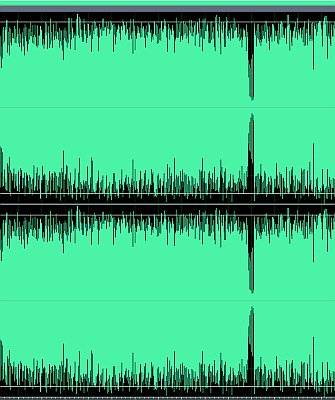
Offspring sound wave
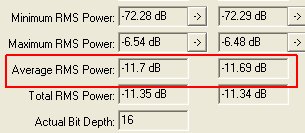
offspring average volume

Now it started to become very loud in the late 90’s. A sample song from Offspring averages around -11dB; and there are minor differences between loud and soft (this means it is heavily compressed and the dynamic range is becoming smaller). Its fun to listen though; then in the middle of year 2000, one my personal favorites:

Track Title: “Cold
Date released: 2004
Performed by: Crossfade
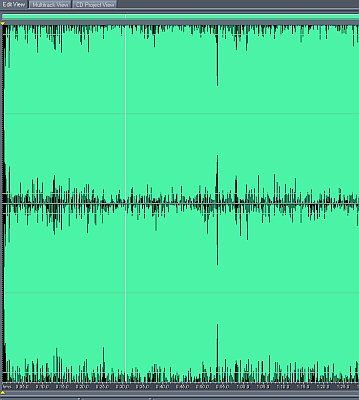
cross fade sound wave
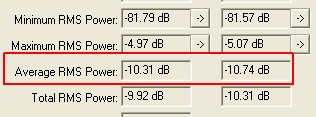
cross fade average volume

It’s now very loud; almost no difference between loud and soft in the entire song. But this song is still very nice to listen despite being influenced in the loudness wars. Its average volume is around -10.5dB.

Finally towards the end of 2010, one of the winning artists in the war of loudness is Metallica. From their album “Death Magnetic” (released September 2008) is one of the loudest albums I’ve ever heard. Below is a sample audio wave of their song “Broken, Beat & Scarred”
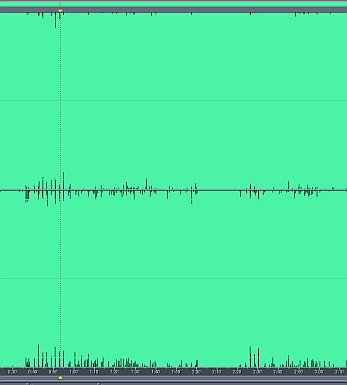
death magnetic sound wave
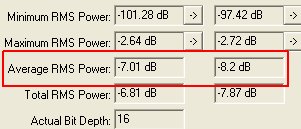
death magnetic sound pressure level

The average RMS power of this song is around -7.5dB and this time I find the volume to be too loud for my own standard. It was now very tiring to listen compared to old Metallica albums. This war should end now and I think I would settle at -13dB to -11dB average volume; I can see it as a standard.

Content last updated on July 5, 2012

Pages: 1 2

5 Responses

  1. This help explains what they mean by losing dynamics.
    http://www.youtube.com/watch?v=3Gmex_4hreQ

    And why the problem can’t really be fixed with the volume knob.
    When a drum smacks in the real world, it’s loud compared to other sounds.
    We’ve lost the “kick ass impact” factor that music used to have.
    And all hope of recorded music even remotely sounding like live music.

  2. Christopher, it’s more about ear fatigue than anything else. As the progression of waveforms in the article clearly demonstrates, the dynamic range has been disappearing over the years. This leads to an all-out assault on your ears, which believe it or not are better off dealing with music that has a greater gap between loud and quiet passages.

    The “loudness wars” cannot end well. Time for producers to bail out.

  3. Well, as you can see, it seems all dynamics is lost in last Metallica example, and some of us still like the effect of dynamics in a song, without dynamics, well hello flatland. And traversing flatlands can become tiring real fast, for the ears that is. 🙂

  4. Hi Christopher,
    Nice observation. I can often complain this when I play the loud CD along with other CDs. I mean I do not listen Metallica alone in the playlist, I tend to include other tracks from other artist possibly even from the 90’s and 80’s. Some players does not have automatic volume control. So when very loud tracks are included in the playlist, I indeed turn their volume down.
    Well If I am doing something else other than listening, it can interrupt your deep concentration 🙂

  5. Dear Sir.

    Okay. I know what I’m about to say must be stupid, but I don’t know why. Y’see, what I seriously don’t understand – this is not supposed to be a joke, or fictitious, or get any of the flip answers forums give me when I ask this – about the loudness war is – CD players, or MP3 players, or whatever, come equipped with a little button or slider called a volume control. If you find a Metallica track too loud, why aren’t you just using the volume control and turning it down?

    On a forum, I’d be accused of being sarcastic. But I’m not. I flat don’t understand this. Why do people complain about things being too loud when they can just turn them down???

    Yours extremely puzzled

    Christopher Burke

Leave a Reply

Your email address will not be published. Required fields are marked *

This site uses Akismet to reduce spam. Learn how your comment data is processed.