
***Home Music Production/Mixing/Mastering Tutorials
***Music Publishing and Music Business Tutorials

Questions from Audio Recording and Music Publishing Blog Readers

by: Emerson ManingoEmail Author on January 16, 2012 in Recording Tips

OK, I received 3 important inquiries from audio recording blog readers. Currently right now, every question that needs to be asked can be found in the music production help section . I will answer their questions publicly since other readers might have the same questions or similar situations.

Question on Sampling Rate and Bit depth

I have a lynx aes16e & aurora 8 and using Cubase 5 on windows 7,64bit. So my question is: Do u advise me to record with 48/32bit, or 48/24bit? Since as you know, Cubase is 32 bit floating…thanks.

My answer:

Technically, 32-bit float has the same resolution as a 24-bit as I have stated in this post:32-bit-float recording bit depth vs 24-bits. The only difference is that 32-bit is a floating point system used internally by the DAW during mixing, etc.
Read the rest of this entry »

Pulse Code Modulation Tutorial in Digital Audio Recording

by: Emerson Maningo Email Author on January 7, 2012 in  Recording Tips

I received an inquiry from one of the site readers:

“Hello, 16 bit (2 bytes) can hold frequencies up to 64 KHz (65,535 bits), so I wonder why anyone would use 24 Bit when a whole byte is being wasted.

You will get the exact same results if you record at 48 KHz for both 16 bit and 24 bit. So why waste the space?

I recorded everything at 16 bit to save space and don’t see the need for 24 bit until I move up to 96 KHz.”

First, the reader ask some few questions pertaining to 24-bit recordings comparing it to 16-bit, so this is a topic relating to analog to digital conversion or PCM (pulse code modulation).

Don’t confuse bits with frequencies

In PCM, it is a standard of representing analog signals in the digital domain. This is a sampling technique; using a high resolution sampling method results in a more accurate digital representation of the analog signals.

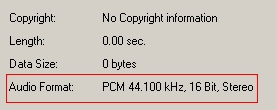
Now to sample an analog audio to digital, your converter needs two parameters:

a.) Bit depth
b.) Sampling rate

Analog is represented by continuous signals such as voltages. After all when the sound wave hits the microphone, it is first converted into microphone levels (weak millivolts) then it will be amplified by audio interface or mixer pre-amp into line level signals. Line level signals are stronger voltages which are then inputted to your analog to digital converter that happens inside your audio interface.
Read the rest of this entry »

Producing Country Music: Production Tips and Techniques

by: Emerson Maningo Email Author on January 1, 2012 in  Recording Tips

Do you know why a country music sounds so different than pop and rock music? This is primarily because it’s been produced using different music production techniques. This could either be the songwriting, vocal styles, instrumentation or mixing and mastering techniques. This post would be helpful if you are self-producing your music and targeting country music.

Getting that Country Sound

Country music from all over the world share common similarities. If you listen to American or Australian country music, you could not tell the differences between them; the same with Canadian country music. So how does the record producer give that song a country sound?

It does not start everything at recording but more on the song and the artist itself. The record producer would primary look at these four aspects:

Vocal/singing techniques – country artist has a unique style of singing. They tend to sing more warmly and calm with a lots of emotions, feeling and clarity. Unlike other genre, country singers are not ultra-high-pitched singers or too low pitched singers but tend to sing somewhere in the middle. If you are used to listening country music, you can easily distinguish country vocal styles from the rest of the genre.
Read the rest of this entry »