I received an important question from a reader:
“I have been using your idea’s for EQing and it seems to be working in a live setting. I was wondering what your ideas are for mixing background vocals even to the point of the different parts, Alto, Tenor, etc. Any idea’s here would be appreciated. Thanks, Garth.”
Hi Garth,
You indeed ask a very important question about vocals EQ particularly its application in choir and background vocals live performance. OK here is a great idea on how to mix this situation.
First, you need to know the frequency range occupied by these voice types:
a.) Soprano
b.) Tenor
c.) Alto
d.) Bass
e.) Baritone
The following are the voice range chart in terms of musical notes and frequency:
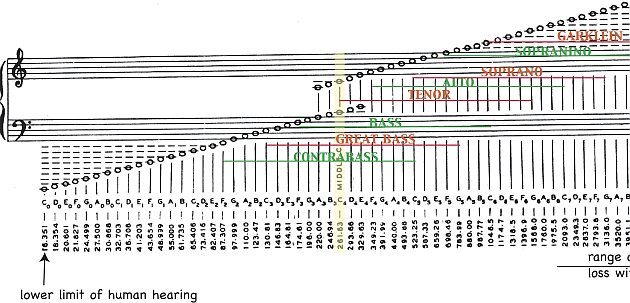
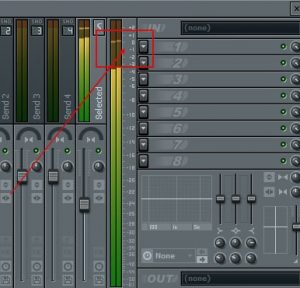
Based on the above chart, the following are the estimated frequency ranges (inside the red box on the screenshot provided above):
a.) Soprano (female) =500Hz to 4000Hz
b.) Alto (female) = 300Hz to 2100Hz
c.) Tenor (male) = 250Hz to 2000Hz
d.) Baritone (male) = it is not indicated clearly in the chart but a baritone voice is between the bass and the tenor. However based on the chart above, there are three types of bass below tenor. These are: bass, great bass and contrabass. The baritone would ideally fit above “great bass” so the range will be: 175Hz to 1000Hz.
e.) Bass (male) = this has the lowest frequency. The range would be 87Hz to 500Hz.
It would be doubtful if anyone can still sing at 87Hz except for talented bass singers. However the voice frequency range is around 20Hz to 20,000Hz and based on the data above, only 87Hz to 4000Hz are effectively used by the choir voices.
That would also support why the telephone bandwidth is between 300Hz to 3000Hz, but obviously you cannot hear bass voices in a telephone. That range is where the ear is very sensitive to human voices.
So how would you mix this in live setting? In EQ, combination of cutting and boosting is more preferable than relying on boosting alone. So the following settings are suggested (as a start but you can further tweak it for best results in live setting):
Mixing/EQ for soprano voices:
Boost at 2.25 KHz +3dB, Q=2.0
Apply low shelf filter with shelf frequency at 400Hz, -6dB (this will drastically reduce frequencies below 400Hz which is not needed for soprano voices)
Mixing/EQ for Alto voices:
Boost at 500Hz +3dB Q=2.0
Apply low shelf filter with shelf frequency at 250Hz, -6dB
Apply high shelf filter with shelf frequency at 2.1 KHz, -6dB (this will reduce “masking effect” with soprano voices, for frequencies above 2.1 KHz)
Mixing/EQ for Tenor voices:
Boost at 1 KHz +3dB Q=2.0
Apply low shelf filter with shelf frequency at 200Hz, -6dB
Apply high shelf filter with shelf frequency at 2 KHz, -6dB
Mixing/EQ for Baritone voices:
Boost at 400Hz +3dB Q=1.4
Apply low shelf filter with shelf frequency at 175Hz, -6dB
Apply high shelf filter with shelf frequency at 1 KHz, -6dB
Mixing/EQ for Bass voices:
Boost at 150Hz +3dB Q=1.0
Apply high shelf filter with shelf frequency at 500Hz, -6dB
Update: Thanks to Grace (below), for providing these relevant websites on choir vocal mixing:
1.) Vocal ranges
2.) Equivalent frequencies of different musical notes
Content last updated on June 16, 2012

8 Responses
Yes because of the echos or reverberations within the church. You cannot make it to sound dry because I assume that the church space would be so big that it will sound as distant.
Below are some suggestions that could improve clarity:
1.) Try miking them very closer to the singers.
2.) Turn off any reverb or delay effects on the mixer (some of them are built-in)
3.) Don’t cut too much between 800Hz to 3000Hz using EQ, if you cut them at that range, the voice would obviously sound distant.
4.) Increase the gain of the microphone but never clipped it.
5.) Listen to the resulting mix but gradually decrease the main volume of the mixer if the vocals are too loud.
6.) Face the monitor/speaker farther from any bouncing walls.
I am not if you can do Item #6 because the monitors are already mounted in the church sound system, well you can still do items 1 to 5.
Sorry I reply you for so long. I check my post one by one for missed comment replies and I found yours. Cheers!
We have about 8 overhead mics 4 in front row 4 in the back. When i turn then up in the mix everthing sounds distant im not sure if its eq or what. im not sure of the model. they came installed in the church
What’s the desired objective for the use of the microphone? As well as the budget and the number of singers in the choir? It depends. Please provide more details and I will look into this. Thanks.
I need help with choir mic.
Hi Tomas,
Thanks for the feedback. I will check on your request and probably write a post about it in the future. Cheers!
Good chart for voice after some surfing and much searching I finally found some, your details combining frequency and voice more work is needed to make this material consistent and logical; but many a musician remember and do not rely on reasoning for this reason there are many inconsistencies in materials on the Web;
Your chart lists baritone as item and the material had great value in mixing. I am involved with local studios trying to refine my voice eg I reached a low D on the mike the other day but can’t use it without tech support cause it’s too weak but a good mike and the gear rumbles good fun 73.4 Hz but that’s from the chart it was done against the drop d tune of the guitar so it may be a little different on the dials.
I was on the microphone but can try again in future to give you an example of a low vocal frequency. I believe I am a baritone my max range goes to mid C and its tough up.
There the 2 octaves on the gear seem possible or the 5 strings of the guitar can you point to info on male artists in this range for study and perhaps recording hints for this range. I can reach little lower than Kenny Rogers USA (country music) in his songs would welcome your thoughts if you have the time.
Best regards,
Tomas T
Hi Grace,
That is indeed very helpful. Thank you for providing those links!
Cheers.
I’m a vocal music education student ive i’ve studied the vocal ranges a bit. Your voice range chart looked off to me so i looked at the site you got it from. I just thought you should know that the chart refers to Recorders (like the instrument most kids play in 4th grade) not voices.
Hope this helps!